How electricians get found on Google in 2026
Where a UK electrician's enquiries come from: the map with 3 businesses on it, the organic results and the directories, and what decides who appears in each.
By Daniel Stoychev, Webso Digital · 29 August 2026 · 7 min read
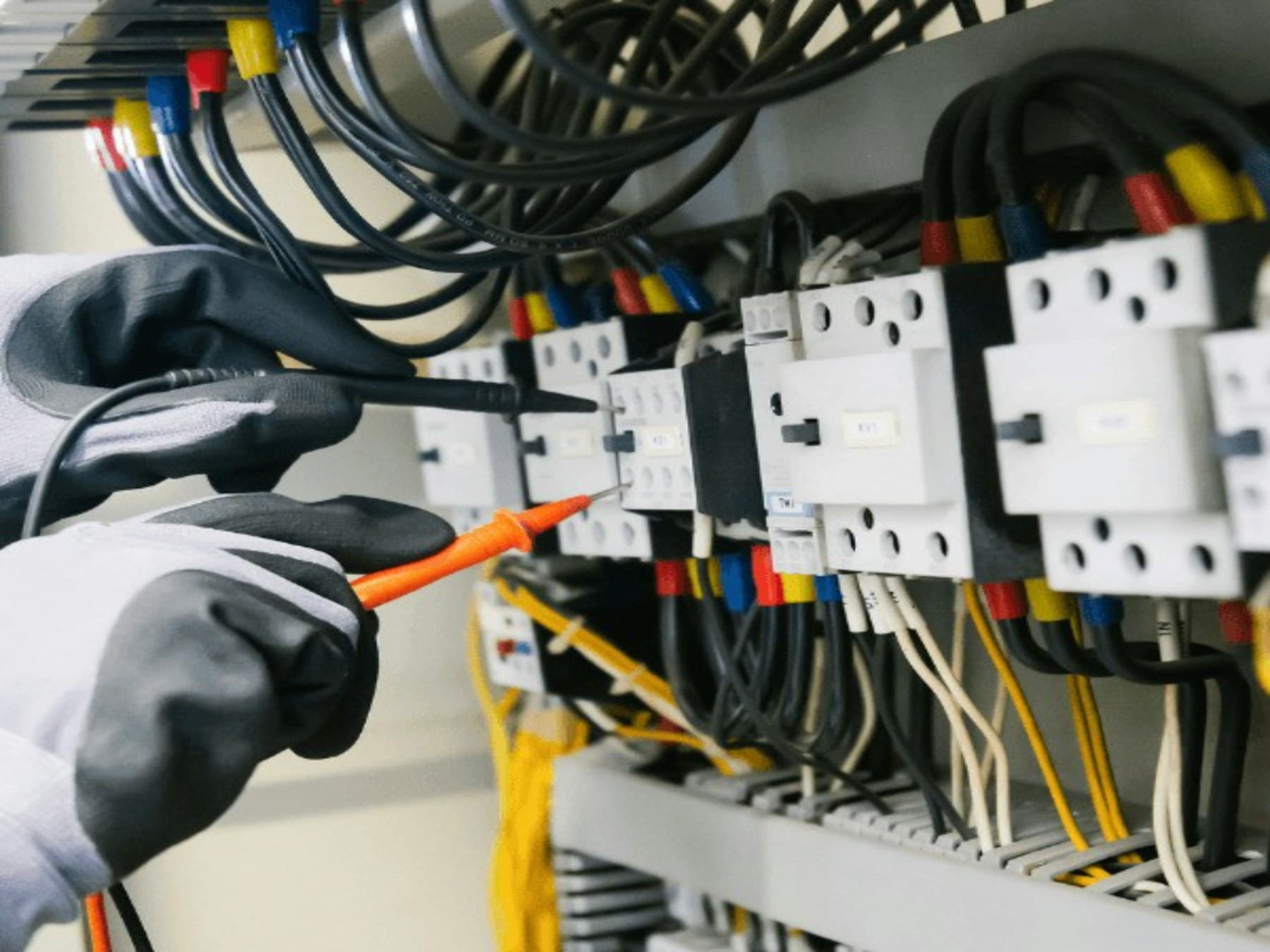
Most electrical work in the UK is found through three doors: the Google map with the three business listings, the ordinary search results under it, and the directories such as Checkatrade that rent the space in between. The map decides who gets the emergency and the small job. The organic results decide who gets the rewire, the consumer unit and the EV charger. Almost nobody phones the fourth result on either.
What a customer actually sees
Type "electrician near me" or "electrician Wrexham" into a phone and look at what comes back. There are usually two or three adverts at the top, then a map with three businesses under it, then a list of ordinary results that starts with a directory or two before any electrician's own website appears. On a phone the map fills the screen. That is why the map pack matters more than anything else for the day-to-day jobs: it is the first thing that looks like a list of electricians.
The three businesses in the map are chosen by Google Business Profile signals, mostly: the category the profile is set to, how close the business is to the person searching, the reviews, whether the profile says it is open right now, and whether the business name contains the words being searched. The website is a supporting act here. Half the electricians we look at have a website that is fine and a profile that is a mess, and the profile is what is costing them.
Where the bigger jobs come from
A rewire, a consumer unit change, an EV charger or a commercial fit-out is rarely an emergency. The person searching has time, they read, and they compare. They search for the job, not for "electrician": "consumer unit replacement Chester", "EV charger installer Flintshire", "EICR cost landlord". Those searches are won by pages, not by profiles. A page that explains that exact job in that exact area, with real photos and a clear way to ask for a price, ranks and converts. A homepage that says "all electrical work undertaken" does neither.
This is the part most electricians never build, because it is work. Each job type needs its own page, written properly, with the questions people ask before they book. It is also the part with the least competition, because the other electricians in your town have not built it either.
What the directories are for
Checkatrade, MyBuilder, Rated People and Bark rank well because they have spent years earning links and reviews. They are worth being on if the fee makes sense for your area, and the reviews you collect there are real trust. But a directory listing is rented ground. The moment you stop paying, the enquiries stop, and the directory is showing your competitors on the same page as you. Your own profile and your own pages are owned ground. Both, in the right proportion, is the honest answer; we cover the trade-offs in our comparison guide.
The order that works
- Fix the Google Business Profile first: right primary category, every service ticked, exact hours, a service area that matches where you actually go, photos of real work, and a steady flow of reviews. This is the cheapest and fastest thing on the list and it moves the map.
- Make the website fast, honest and specific. One page per job type you want more of, each with the area named, the questions answered and a form that reaches you.
- Earn mentions: the local business directories that are actually maintained, the wholesaler or manufacturer "find an installer" lists, the NICEIC or NAPIT register, local news if there is a story. Google reads these as evidence that you exist and are who you say you are.
- Measure. Search Console is free and shows you exactly which searches showed your site and which pages were clicked. Without it every decision is a guess.
A test you can do tonight: search your own trade and town from a phone, in a private window, and count how many of the results are directories. Every directory in that list is a page you could out-rank with your own, because you can be more specific than they will ever be.
How long it takes
Profile changes show within days. Reviews compound over weeks. New pages take three to six months to settle, longer in a city with a lot of established competition. Anyone who promises page one in thirty days is describing the map pack for a search nobody makes. We say this on every proposal, because the alternative is a client who stops in month two, just before it starts working.
Questions on this topic
Do I need a website if I have a good Google Business Profile?
For emergency and small jobs, a strong profile does most of the work. For rewires, consumer units, EV chargers and commercial work, people research before they call, and that research happens on pages. A profile with no website behind it also converts worse, because the profile links somewhere and "nowhere" costs trust.
Does Checkatrade help my Google ranking?
Indirectly. A Checkatrade profile is a citation and a source of reviews, both of which Google reads as evidence you are a real, active business. It does not pass ranking power to your site in the way people imagine, and it competes with your site on the same results page.
How many reviews does an electrician need to appear in the map pack?
Enough to be in the same range as the three businesses already there. In most UK towns that is somewhere between twenty and eighty. Recency and a steady flow matter as much as the total; ten reviews in a week then nothing for a year looks like what it is.
Can I do this myself?
The profile work, yes, if you follow a checklist and keep it up. The pages need writing, the site needs building properly, and the mentions need chasing every month. Most electricians we talk to did the profile once, well, and then never touched it again, which is when it stops working.