Commercial electrician: 1,900 searches a month from a buyer who is not a homeowner, and the proof page they read before they ring
Commercial electrician is searched 1,900 times a month by facilities managers. What they check before ringing, and the page that wins the contract.
By Daniel Stoychev, Webso Digital · 6 October 2026 · 7 min read
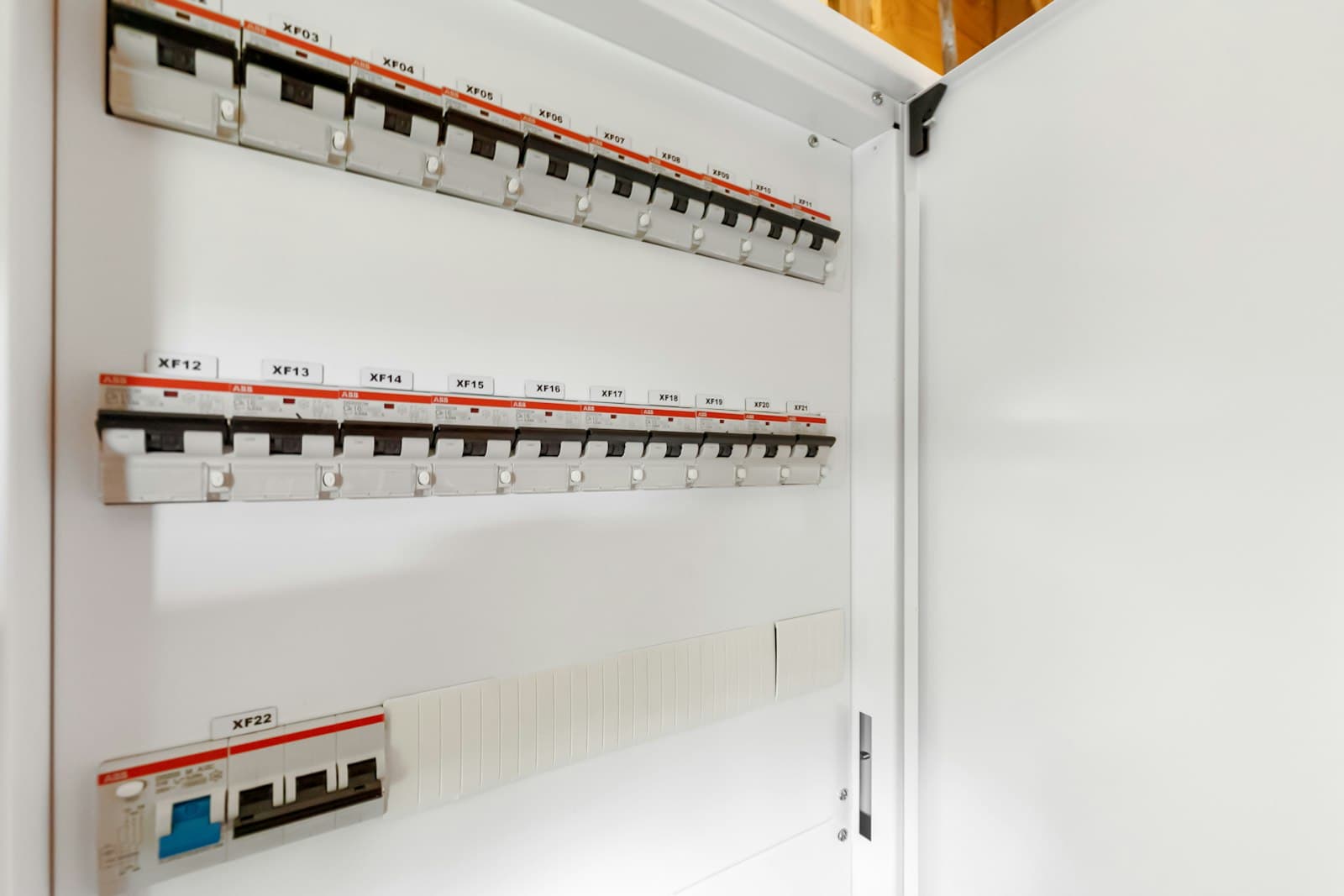
"Commercial electrician" is searched about 1,900 times a month in the UK, with the highest bids of any term in the trade, and the person typing it is a facilities manager, a landlord with a parade of shops, a shopfitter who needs a sub-contractor by Monday, or a site manager with a programme. They do not read your website the way a homeowner does. They are checking whether you can be put on a job without a conversation: the right registration (an approved contractor scheme, not a domestic installer one), the insurance levels, the health and safety accreditations their procurement asks for, and proof of work like theirs. The page that wins the contract puts those on the screen in that order, says what you do not do, and treats the phone number as the last step rather than the first.
What the commercial buyer checks, in order
| Check | What they are looking for | Where it goes on the page |
|---|---|---|
| Registration | An approved contractor registration with NICEIC, NAPIT or another body, which covers commercial and industrial work; a domestic installer registration does not | The first screen, named, with the registration number linked to the register |
| Insurance | Public liability at the level their contract requires, often five or ten million, and employer's liability; sometimes professional indemnity for design | A line under the registration, with the figures, not "fully insured" |
| Health and safety | Accreditations such as CHAS, SafeContractor or Constructionline where their procurement requires one; RAMS on request | Named, with the expiry, and a sentence saying method statements are produced for every job |
| Capability | Can you do this type of work at this scale: a fit-out, a distribution board upgrade, emergency lighting, EICRs across a portfolio | One section per type of work, with the scale you handle stated plainly |
| Proof | Work like theirs, with the sector, the scale, the time and the outcome | Case studies, named where the client allows, anonymised by sector where not |
| Reliability | Will you turn up at seven, keep to the programme, and send one invoice that matches the quote | Said once, plainly, with the reference you are willing to give |
Notice what is not in the table: reviews, a friendly team photograph, and a paragraph about passion. The commercial buyer reads those as signs of a domestic firm, and the biggest mistake on commercial pages is to write them for the wrong reader.
Say what you do not do
A commercial page that claims everything reads as a domestic firm reaching. A page that says "fit-outs, board upgrades and emergency lighting for retail and offices up to three storeys; we do not do HV or data centres" reads as a firm that knows what it is. The buyer is matching you to a job, and the sentence that rules you out of the wrong job is the sentence that rules you into the right one.
Read your commercial page as a facilities manager with a job to place by Friday. If the insurance figure, the registration number and a comparable job are not on the first two screens, they have already opened the next tab.
The case study that does the selling
One paragraph per job: the sector, the building, what was wrong or what was wanted, what you did, how long it took, what it cost if the client allows, and a line from the client if they will give one. Photographs of the board, the containment, the finished unit. Three of these beat thirty reviews for this reader, because they answer the only question the buyer has: have you done this before, at this scale, without drama.
What to leave off the commercial page
- The domestic services. A facilities manager reading "we also do sockets and lights for homes" places you in the wrong column; put the domestic work on its own page.
- Stock photographs of hard hats and clipboards. One photograph of your own board in your own plant room says more than twenty of somebody else's.
- Prices. The commercial buyer expects a quote against a scope; a price list on the page reads as domestic and invites the wrong comparison.
- Reviews as the headline. Keep them, below the accreditations; a page that leads with five-star reviews is written for a homeowner.
- A chat widget or a pop-up. The buyer is reading at a desk with a job to place; interrupting them loses the tab.
The sub-contractor route
A large share of commercial electrical work comes through main contractors and shopfitters who keep an approved sub-contractor list and need a firm by Monday. Their checks are the same ones in the table, done faster, and a page that has them in order gets you onto the list from a single visit. Say that you sub-contract, what you bring (your own labour, your own test equipment, your own certification), and the lead time you can hold a crew for. That paragraph is the one the shopfitter reads twice.
Where commercial work actually comes from
The search is the start, not the whole route. Facilities managers keep lists; shopfitters and main contractors keep approved sub-contractor registers; landlords' agents keep a spreadsheet of who answered the phone last time. The page's job is to get you onto those lists with the checks already passed, which is why the accreditations and the insurance are on it, and the case studies are what keep you there. LinkedIn carries the same page for the same reader and should say the same things.
What to expect
Commercial searches are few and slow, and the page shows for "commercial electrician [town]" within weeks on an established site. The measure is not clicks; it is the enquiry that arrives by email with a scope attached, from a firm you have not worked for, and the contact page should ask where they found you. One contract pays for the page many times over, which is the honest scale of commercial work and the reason it is worth writing properly.
Questions on this topic
What should a commercial electrician page show first?
The registration (an approved contractor scheme that covers commercial work, with the number linked to the register), the insurance levels in figures, and the health and safety accreditations the buyer's procurement asks for. Those are what a facilities manager checks before anything else.
Do Google reviews matter for commercial work?
Less than for domestic work. The commercial buyer reads case studies and accreditations; a page full of five-star reviews and team photographs reads as a domestic firm. Keep the reviews, but lead with the proof the buyer actually checks.
Should we say what we do not do?
Yes. A page that claims everything reads as a firm reaching; a page that states its range and its limits reads as a firm that knows what it is, and the buyer is matching you to a job.
What insurance figure should the page state?
The public liability level you actually hold, in figures, and employer's liability; professional indemnity if you design. "Fully insured" tells a buyer nothing, and most commercial contracts specify a figure.
How many searches are there for a commercial electrician?
About 1,900 a month in Google's Keyword Planner for the UK, twelve months to August 2026, with the highest bids of any term in the trade, which is a measure of what a commercial job is worth.